Friday, July 09, 2010

Custom Orthotics can help you!


Custom orthotics can help you avoid some common foot problems!


Corns and calluses are thick, hard layers of skin that develop from pressure when foot bones push together or against footwear. Corns appear on or between toes and calluses are usually found on the balls of the feet and on the heels.


Blisters are bubble-like pockets that develop when skin rubs continuously against another surface. this friction causes a tear inside the upper layers of the skin (the epidermis), which forms a space between these layers and fills it with fluid. Help prevent corns, calluses and blisters by wearing properly fitting shoes and by using cushions and/or custom orthotics that protect areas highly prone to such problems


A Bunion is an enlargement of the big toe's joint. It often develops when the big toe bends inward toward the other toes, a condition called "Hallux Valgus". These problems are often created by frequently wearing tight shoes that squeeze toes together. Hereditary factors can also be a cause.


If you have a bunion, you can relieve pain from footwear by placing a cushion over the tender area. Custom Orthotics can also slow down the progression of the bunion. Severe cases may require surgery, however wearing a splint or a toe spacer may help slow down the progression of the condition also and postpone the surgery.


The Ball-of-Foot area is part of the forefoot, located between the base of the toes and the foot's arch. "Metatarsalgia" is a general term used to describe pain in that area. "Morton's Neuroma" is a condition associated with pain, swelling, and/or a burning sensation in the ball-of-foot's nerve, most commonly between the 3rd and 4th toes. these ailments can occur after the forefoot experiences long periods of excessive pressure, such as when wearing high-heeled shoes or participating in high-impact activities. Also, the ball-of-foot's natural fat pad thins out with age and makes the area more susceptible to problems . To protect and relieve feet, add cushion to shoes to comfort the sensitive areas. Custom orthotics can also be made to fit your foot to protect these areas.


The Arch is the curved part of the middle of the foot. It's shape is maintained by the "Plantar Fascia", a connective tissue band which runs from the heel to the forefoot. Excessive stretching of the plantar fascia, usually due to over-pronation ("flat feet") causes "Plantar Fasciitis", a condition that can create pain and strain in the arch and the heel. If left untreated, bony protrusions ("heel spurs") may develop on the heel. If you suffer from arch problems - wearing supportive custom orthotics can provide relief


Monday, June 28, 2010

What type of foot arch do you have?


Feet have three basis arch types: Normal, High and Flat.


Normal Arches: Normal arches are medium arches. while walking, these feet naturally land on the outside of their heels and then roll inward slightly, or "Pronate", to absorb shock.


High Arches: High arches can be flexible or rigid. flexible high arches over-pronate, which means the foot rolls inward too much while walking. Rigid high arches under-pronate and do not absorb shock effectively.


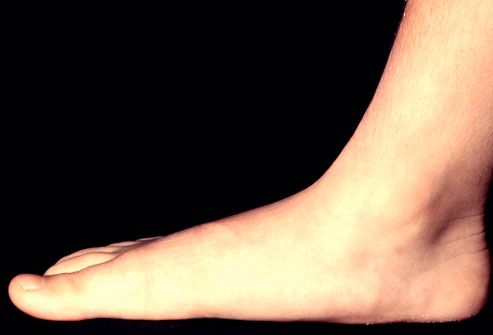
Flat Arches: Flat arches, also known as "FLAT FEET", are low and overly flexible. They flatten and roll inward too much.


The arch is the curved part of the middle of the foot. It's shape is maintained by the "Plantar Fascia", a connective tissue band which runs from the heel to the forefoot. Excessive stretching of the plantar fascia, usually due to over-pronation ("Flat Feet") causes "Plantar Fasciitis", a condition that can create pain and strain in the arch and the heel. If left untreated, bony protrusion ("Heel Spurs") may develop on the heel.

Help Your Arches!!

Arches that are not normal will not pronate properly. Flexible arches - High and Flat - can be comforted by custom foot supports. Custom orthotics prescribed by your podiatrist not only cradle the arches, soothe plantar fasciitis, absorb shock, and well as pain in the legs and lower back.


Saturday, May 01, 2010

ORTHOTICS - A NATURAL CURE


It is estimated that greater than 75% of the population suffer from EXCESS PRONATION due to the Tibial Varum Factor and the unnatural, hard flat surfaces that we walk on daily. EXCESS PRONATION often disrupts normal nee function and hip alignment and increases forces on the lower back muscles. These bio mechanical deficiencies are common in all types of patients from children to the elderly, from top athletes to people with a sedentary lifestyle. By realigning the lower limb to its natural angle custom orthotics ensure correct foot function and help relieve common bio mechanical complaints. In combination with the Podiatrist's regular treatment regime, custom orthotics are usually successful in alleviating chronic pains. The human foot was originally designedto walk on natural, soft surfaces like the earth and sand. Instead, we now spend most of the day on unnatural, hard, flat surfaces like pavements and floors that force our feet to flatten and twist. The "LOSS OF OUR FOOTPRINT" has resulted in a new modern variety of pan and injuries. The normal lower limb has a 3-4 degrees Tibial Varum (mild blow-legged) angle when approaching the ground. When the feet strike natural surfaces like earth and sand, these surfaces give way to accommodate to the foot's strike angle. However, when the feet strike hard flat surfaces like pavements and floors the feet flatten and pronate excessively upon contact. Excess pronation at the SUBTALAR JOINT commonly exhibits: CALCANEAL EVERSION - INTERNAL TIBIAL ROTATION - MEDIAL PLANTAR DISPLACEMENT OF THE TALUS UPON THE CALCANEUS - LOWERING AND ELONGATION OF THE ARCH STRUCTURE - EXCESS WEIGHT BEARING OVER THE 1ST METATRSOPHANGEAL JOINT - EXCESS MEDIAL LOWER LIMB STRAIN - EXCESS LATERAL UPPER LIMB COMPENSATION. Remember your footprints when you last walked on the beach? You will notice that the sand gave way under the lateral strike of your heel forming a natural wedge. Thus preventing excess subtalar joint pronation from occurring. This is what custom orthotics will do for you and your feet.

Saturday, April 03, 2010

LIVING WITH ORTHOTICS!


The success of your orthotic treatment depends greatly on you and your expectations. If you maintain your orthotics in good condition, you can expect them to last for years. But as your age or face new physical demands, the needs of your feet may change. Follow-up visits with you podiatrist may help control new foot problems before symptoms develop. Realistic Expectations: Your foot problem took time to develop, so don't expect your symptoms to go away overnight. But if you wear your orthotics as instructed, your symptoms can lessen over time. Also keep in mind that your orthotics can help you move more comfortably, but they won't change the structure of adult feet. Your orthotics will work only if your remember to wear them. Orthotic Care: Your orthotics must be in good condition to do their job. By replacing a torn or badly worn covering, you can extend the lift of your orthotics. Lost posts or additions should be replaced to avoid new foot movement problems. If your orthotics crack, begin to lose their shape, or start rocking in you shoes, they may need replacing. Follow-up Visits: Once you're wearing your orthotics full-time, regular podiatric checkups can help you maintain the health of your feet. As with contact lenses, your orthotic prescription may change over time, and your podiatrist may recommend new orthotics. Children, athletes, and people with health concerns affecting their feet may require special care. Your podiatrist will recommend a foll-up schedule to meet your individual needs. Moving with support: Your feet no longer have to ache with every step. By controlling foot movement, your orthotics can make it easier to get on with your life and the activities you enjoy. Help yourself keep this symptom-free pace by wearing your orthotics daily and visiting your podiatrist regularly.

CUSTOM ORTHOTICS


TRYING OUT YOUR NEW CUSTOM ORTHOTICS: After your orthotics arrive from the lab, your podiatrist will make sure they fit and correct your movement problem. You may be asked to walk with your orthotics in your shoes to check for sharp edges or rubbing. Minor adjustments may be made by your podiatrist, but extensive changes may require returning your orthotics to the lab. BREAKING IN YOUR ORTHOTICS: Getting used to your orthotics takes time. They may feel strange, even uncomfortable at first. But if your build up your daily wearing time as your podiatrist instructs, you can get used to the feel of your orthotics. You'll probably be wearing them full time by the end of 2 or 3 weeks. SELECTING SHOES FOR YOUR ORTHOTICS: Orthotics usually work best in shoes with a closed toe and low heel. you may be able to your pair in similar types of shoes. But if your wear different shoe styles or enjoy a sport that makes special demands on your feet, you may need more than once pair of orthotics. When you're shoe shopping, remember to wear your orthotics. Your want to be sure they fit and don't slip in the shoes you want to buy.

FITTING YOUR CUSTOMIZED ORTHOTICS

To meed your unique needs, your orthotics can be custom built from different methods of casting the feet. Our office uses a TomCat Scanner - this is a 3-D scanner - we make a 3-D image of your feet to reproduce images to be used to create your custom orthotics. We also have biofoam impression where we evenly compress your feet into the biofoam for the impression. Another way is using casting supplies with plaster or casting socks where we use water and hands to form the plaster or casting socks to your foot. Which ever casting device is used - the scan or cast is sent to an orthotics lab where a trained technician with then craft your custom orthotics to meet your specific prescription and fit the model of your foot. Your can expect to receive your new custom orthotics anywhere from 2-4 weeks.

Different Types of Custom Orthotics

Rigid Orthotics: Rigid orthotics are made from study materials such as steel, graphite, or special plastics. They offer the greatest control of foot movement. In young, growing children, rigid orthotics may improve the way the bones of their feet develop. Rigid orthotics may relieve bunion pain by controlling over pronation and the pull of tendons on our big toe joint. Semi -Rigid Orthotics: Semi-Rigid orthotics control foot movement and increase shock absorption. They are often made of flexible plastic, and may help reduce strain on soft tissue overused during strenuous activities. Semi Rigid orthotics may relieve inflammation of the plantar fascia caused by over pronation. Soft Orthotics: Soft orthotics cushion your feet when they're on the ground, but offer only limited control of foot movement. Made of spongy plastic or foam, soft orthotics are lightweight but slightly bulkier than the more rigid varieties. Soft orthotics can redistribute weight away from a callus on the bottom of your foot. Accommodative Orthotics: Accommodating orthotics protect your feet from the stress of weight bearing. Made of cork, foam, or leather, these orthotics may have indentations or raised areas to take pressure off tender parts of your foot. If a medical problem places your feet at risk, accommodating orthotics may protect your feet from sores and infection.